Is Christianity true? If so, it can stand a little critique. This blog is that critique—50 big ideas that every Christian should understand (but rarely do) and that each take a couple of minutes to read. The goal is not to deconvert Christians but simply to inform them. Think of this as a friend giving honest feedback.
This is the blog your pastor warned you about! Read an overview of this project here or get started with big idea #1 here.
The Great Commission was the final demand of Jesus to his disciples before he returned to heaven: “Go and make disciples of all nations.” Many Christians see this directed at them and conclude that they too are obliged to actively get out and spread the Word.
Christians are often uncomfortable with the demand that they witness to strangers, but fortunately this isn’t their fight. In the first place, Jesus wasn’t talking to them. The Great Commission was given to the apostles, not ordinary Christians.
To see this, consider how Jesus commands the disciples to share the gospel. At one point, they are given “authority to drive out impure spirits and to heal every disease and sickness.” At another, Jesus sends the disciples on their way with a power you’d think would be reserved for God himself: “If you forgive anyone’s sins, their sins are forgiven; if you do not forgive them, they are not forgiven.” Ordinary Christians today are not given these godlike abilities.
Second, Christians today regularly ignore biblical norms that don’t fit with our modern society—the Old Testament’s support for slavery, polygamy, genocide, human sacrifice, and so on. God’s stance is clear on these topics, but loftier principles override the Bible, and Christians follow these when deciding moral issues today. If pushing your beliefs on others also seems wrong somehow, maybe that’s because it is.
And what’s the point of evangelizing anyway if the Holy Spirit does the work, not Christian evangelizing, “so that no one can boast”? Surely the omnipotent Holy Spirit can save souls as necessary regardless of what unreliable people do or don’t do.
Paul says we have different gifts, and yours may not include evangelism. Don’t take on the teaching role lightly: “Not many of you should become teachers, my fellow believers, because you know that we who teach will be judged more strictly.”
Third, consider the downside of not evangelizing. You might fear that your timidity to evangelize your neighbors or family would be a missed opportunity to save them from hell, but Paul makes clear that this fear is unfounded. Creating a parallel between Adam’s sin and Jesus’s sacrifice, Paul said, “For just as through the disobedience of the one man the many were made sinners, so also through the obedience of the one man the many will be made righteous.” In other words, you didn’t opt in to be burdened with Adam’s sin, and you don’t need to opt in to get Jesus’s salvation.
Christians, there’s work enough to set an example as a good Christian. If someone asks, you can give “the reason for the hope that you have.” If you want to follow the lead of Jesus, he spoke often about helping the disadvantaged. That’s a charge that makes a lot more sense.
A Christianity without the burden of the Great Commission would be a healthier Christianity, less likely to be the sanctimonious busybody that meddles in politics and society that we see too often in the West today.
Image credit:Carl Bloch, 1877 (public domain) via Wikimedia
Notes
“This generation will certainly not pass away until all these things have happened”: Matthew 24:34.
“Go and make disciples of all nations”: Matthew 28:19.
“authority to drive out impure spirits and to heal every disease and sickness”: Matthew 10:1.
“If you forgive anyone’s sins, their sins are forgiven; if you do not forgive them, they are not forgiven”: John 20:23.
“so that no one can boast”: Ephesians 2:8–9.
Paul says that we have different gifts: 1 Corinthians 12:4–11.
“Not many of you should become teachers”: James 3:1.
“For just as through the disobedience of the one man the many were made sinners”: Romans 5:19.
“the reason for the hope that you have”: 1 Peter 3:15.
Suppose supernatural truths exist, but they’re not obvious. Instead, we could only dimly perceive them. What would such a world look like?
We might have a Babel of religions because of our imperfect understanding, but we’d also find convergence. As disparate religious groups compared notes, common supernatural truths would become clear. We’d see positive feedback, and pieces would fit together as we matched our tentative consensus against that rudimentary understanding of the Divine. And if that supernatural Divine wanted to encourage our efforts, it could nudge us in the right direction so humanity would gradually cobble together an accurate understanding.
In fact, we see the opposite. No common truth pushes religions toward a single consensus view. There isn’t even agreement on the number of gods or their names, let alone what it takes to please them. Christianity continues to fragment and morph as new denominations form. There are 45,000 denominations of Christianity, and new denominations appear at a rate of two per day. We see that same fertility in other religions.
The Christian response is often to argue that God could have his reasons for not making clear the correct path, and we simply don’t understand those reasons. That is possible, but where’s the evidence? This is the Hypothetical God Fallacy, where God is supposed into existence.
We don’t believe something because it hasn’t been proven wrong; we believe because good evidence shows that it’s right. And when we follow the evidence, it doesn’t point to Christianity.
Christians usually agree that people invent religions—that’s how they explain all those other religions. But in explaining away the other religions, they have explained away their own. Christianity looks like just one more manmade religion.
Religion is built on human imagination and emotions, evolving as conditions change with no immutable truth to guide and constrain it. There is no loving god wanting a relationship who would make his existence known to us, and Christians must use faith to cover up this awkward fact. There’s not even a cosmic truth seen “through a glass, darkly” (that is, seen reflected in a mirror, dimly), as Paul put it. The glass isn’t dark; it’s black. There is no external truth nudging us in the right direction.
If there were a supernatural truth out there and if evidence rather than wishful thinking steered religious beliefs, we’d expect religious claims to be tested and either kept or dropped based on how well they matched reality. With this view, we should see humankind gradually converge on a single religious story, with false beliefs gradually falling away and correct beliefs encouraged and strengthened. But that isn’t how religion works.
Not only is there no evidence that a dimly seen god exists, but religion is the last place you’d expect an unbiased search for the truth. Religion has no interest in following the evidence without bias but in sifting out evidence to support its preconceptions and ignoring the rest.
Hypothetical God Fallacy: the presupposition of a god without sufficient evidence, often stated, “But if God exists….” We can consider the consequences of God once we have evidence for him, but you don’t imagine him into existence. First the evidence, then the God hypothesis.
What fraction of Muslims were not raised in a Muslim environment? What fraction of Christians were not raised in a Christian environment? What does it say about the validity of religious claims that people typically take on the religion of their culture?
When someone gets a religious vision, it has elements from that person’s religion—Hindus don’t get visions of Mary or Jesus, and Christians don’t get visions of Ganesh or Shiva.
To avoid the charge of special pleading, Christians who state that their religion alone is correct must argue that they were just extraordinarily lucky to live in a place and time in which the correct religion happened to be available.
This argument is concise but incorrect when stated too emphatically, as with the subtitle here, “You’d be Muslim if you were born in Pakistan.” Lots of Muslims have changed worldviews, and the same is true within Christianity or just about any other religion. Nevertheless, the strong correlation between culture and belief must be explained. If Christians deny that the correlation between upbringing and adult belief means anything, they’re left explaining why 26 countries are greater than 95 percent Muslim.
Adults sometimes switch religions, though this is rare. A 2015 study of world religions predicted that of the 8.1 billion believers expected in 2050, less than one percent will have switched into their belief.
But if atheists were raised in atheist environments, are their conclusions about religion just as suspect as those of the Christian raised in a Christian environment? No, because there is no symmetry here. Children raised in a religion-free environment usually aren’t atheists because they were taught to be atheists but because they were not taught to be religious. By contrast, Christians can only become Christian because they were taught to be. Remove tradition and religious books, and Christianity would vanish. There is no objective knowledge from which to rebuild it.
Seen another way, dismiss all beliefs about religion, pro and con, and you’re left with no opinions about supernatural beliefs at all—in other words, atheism, the lack of a god belief.
Religion is like language. You speak your mother tongue because it surrounded you growing up. You didn’t evaluate all the languages of the world before picking the best one; it was just part of the environment.
Language, customs, fashion, and traditional food aren’t evaluated on a correct/incorrect scale. The English language isn’t any more correct than French or Chinese or Farsi; it’s just what some people are accustomed to. It’s not incorrect to understand or speak or prefer French; it’s just uncommon in parts of the world.
In the United States, one speaks English—not everyone, of course, but mostly. And in the United States, one is a Christian—not everyone, of course, but mostly. There’s no value judgment behind either one. Religion and language are simply properties of society.
Christians aren’t Christian because Christianity is true, but because they were born into a Christian environment. Christianity is just a cultural trait.
Christians claim to have the ear of the omnipotent creator of the universe. For them to make their case, however, I challenge them to show just one demonstration from the list below.
Show one scientific truth about nature or technology discovered first in the pages of the Bible.
Show one disease eliminated from the earth or one missing limb restored through prayer.
Show one Bible prophecy or prediction by a Christian prophet accepted as fulfilled by non-Christians.
Show any supernatural claim within Christianity accepted by non-Christians.
The Bible has stories of people miraculously cured of disease, but so might a book of fairy tales. The Bible doesn’t even give basic sanitary practice.
Jesus could have eliminated plague and smallpox and saved the lives of billions, but instead he withered a fig tree and did less curing of disease in his career than a typical doctor does today. The Bible promises that every believer will be able to perform the works of Jesus and more, and yet no medical miracle claims from any religion have ever been verified.
Another missed opportunity was in universal communication. Some in the early days of the Pentecostal movement claimed the Holy Spirit gave missionaries fluency in any earthly language, though that claim failed when tested. Glossolalia (speaking in tongues) today usually means a gibberish utterance in no human language.
God could have guided his most cherished creation past problems like war, genocide, slavery, prejudice, pogroms, overpopulation, and environmental disasters. He doesn’t help undo the damage from natural disasters. Faith has never moved mountains, though the Bible says it will. And prayer doesn’t do anything objectively measurable.
The Christian may point to some of Christianity’s contributions to society such as majestic cathedrals. They might demand to know what grand institution was built by science. Answer: there’s the Royal Society. Or Scientific American magazine. Or Bell Labs. (And keep in mind that science and engineering put those cathedrals up, not God.)
How about the Sistine Chapel ceiling, a masterpiece inspired by Christianity—what great work of art was inspired by science? There’s the Large Hadron Collider. Or the Hubble space telescope. Or the Eiffel Tower. Astronomy has given us mind-blowing photos that Christianity couldn’t begin to imagine. And it’s not like Christianity has a monopoly on religious art. Consider the art and architecture inspired by the religions of ancient India, China, Mesoamerica, Greece, Rome, and Egypt.
How about Michelangelo’s art, inspired by Christianity—where is the Michelangelo of science? There’s Richard Feynman. Or Albert Einstein. Or Stephen Hawking.
The Christian may respond to demands for evidence that God doesn’t perform like a trained monkey, but what we see is neatly explained by God not performing at all.
Glossolalia: In the book of Acts, this referred to sudden fluency in a foreign (but earthly) language. Today, it usually means speaking in an angelic language. Glossolalia is said to be a spiritual gift, and another gift is interpreting unintelligible speech.
Christianity’s Big Promises: This topic was inspired by a personal communication from Richard S. Russell.
Faith has never moved mountains, though the Bible says it will: Mark 11:23.
every believer will be able to perform the works of Jesus and more: John 14:12.
[Jesus] withered a fig tree: Matthew 21:19.
the Holy Spirit gave missionaries fluency: Vinson Synan, The Holiness-Pentecostal Tradition (Eerdmans, 1997), 92.
In the beginning, God wasn’t omnipotent. Only later in the Bible did he become all powerful, all-knowing, omnipresent, and so on. Some of the earliest Bible stories reveal God’s initial limitations.
We read in the book of 2 Kings that after a unified Israel split into Israel and Judah, the kingdom of Moab was a vassal of Israel. One Moabite king tired of paying tribute to Israel and rebelled. To subjugate Moab, Israel and its allies attacked, destroying cities and towns as they went.
When they reached the last stronghold, the king of Moab had one final ploy. He took his son, the future king, and sacrificed him on the city wall to the Moabite god Chemosh. The result: “There was an outburst of divine anger against Israel, so they broke off the attack and returned to their homeland.”
This contradicts the promise from just a few verses earlier, where the prophet Elisha said, “[Yahweh will] hand Moab over to you. You will defeat every fortified city and every important city.” Even worse, in a fight between the tribes of Yahweh and Chemosh, Yahweh lost. Perhaps Yahweh could have won if he had gotten the energy boost from the sacrifice of the future king instead of his rival.
If Chemosh sounds like nothing more than a tribal god made up by primitive ancient people, why does Yahweh look any different?
Let’s examine another wartime situation in the book of Judges. An enemy had harassed Israel for twenty years with 900 chariots “fitted with iron,” but as powerful as this chariot force was, Israel with God’s support was able to defeat it.
Earlier in Judges, another conflict ends very differently. The book begins with the Israelite tribes of Judah and Simeon joining forces to destroy the remaining Canaanite strongholds. The campaign wasn’t universally successful, however. “[Yahweh] was with the men of Judah. They took possession of the hill country, but they were unable to drive the people from the plains, because they had chariots fitted with iron.”
The verse makes clear that Yahweh was there, supporting his people, but somehow Iron Age weaponry defeated the almighty creator of the universe.
This is easy to understand when we realize that at this point in the Bible, Yahweh had weaknesses and was not the omnipotent being he evolved into later in the Bible. He was more like Hercules—very strong but not invincible, wise but not all-knowing, and moody. The Bible itself records the evolution.
Jesus also had limitations. While preaching in Nazareth, he didn’t get the reception he was expecting. “He could not do any miracles there except lay his hands on a few sick people and heal them. He was amazed at their lack of faith.”
The reason for Jesus’s failure isn’t the point, of course; the point is that Jesus failed. If iron is God’s kryptonite, apparently it’s lack of faith for Jesus.
These stories neatly illustrate that God—omnipotent, omniscient, and omnipresent today—evolved from much humbler literary beginnings.
Burnt offering: How can you convey a gift to God? You use smoke to carry the nourishment of the offering up into the sky where God lives. An “animal sacrifice” was partly burned but then eaten, while a “burnt offering” was completely burned. The Bible refers to the “pleasing aroma” of offerings forty times.
“There was an outburst of divine anger against Israel”: 2 Kings 3:27 (NET).
“[Yahweh will] hand Moab over to you”: 2 Kings 3:18–19 (NET).
“They took possession of the hill country, but they were unable to drive the people from the plains, because they had chariots fitted with iron.”: Judges 1:19.
Some Christian apologists argue that the courtroom gives a great analogy to how we should evaluate the evidence for the claims of Christianity. It doesn’t. The courtroom analogy is precisely where we shouldn’t go to find the truth. We can do much better.
Consider the difference between a lawyer in a courtroom and a scientist in a university. The scientist is encouraged to share research with colleagues and ask for advice. Openness and camaraderie are essential parts of scientific research. Scientists must follow the evidence, even if it leads away from a cherished hypothesis.
Contrast that with how the lawyer works. The courtroom is an intentionally adversarial environment. There is no collegial give and take between the opposing sides of the issue, no meeting of the minds, no compromise. If you’re paying someone to represent you in court, that lawyer must present just one side of the case—yours. You want that lawyer to be biased and argue just your position. Evidence is useful only to the extent that it supports a lawyer’s side of the argument. The other side does the same thing from their viewpoint, and a judge or jury decides the relative merits of the two cases.
The concept of double jeopardy (someone can’t be tried twice for the same crime) applies in the domain of lawyers, but there’s no equivalent for scientists. A hypothesis or theory is always provisional, and any conclusion can be revisited or overturned.
The thinking of the scientist contrasted with that of the courtroom lawyer is brainstorming vs. secrecy. It’s forum vs. battleground. It’s searching for the truth vs. presuming one’s correctness. Scientists should be open to changing their minds and backing other hypotheses, while courtroom lawyers are obliged to stick with their position regardless of the arguments on the other side. The courtroom lawyer is forbidden from saying, “Okay, you’ve convinced me, and I’ve changed my mind,” but this happens in science all the time. There’s nothing wrong with this kind of lawyer thinking in its place, but don’t confuse it with scientist thinking.
Our imperfect brains are encumbered with biases such as confirmation bias (noticing only the evidence that confirms what you already believe) or the truth effect (trusting a claim simply because you have heard it many times). These biases make lawyer thinking a natural rut for us to fall into, but it begins with the conclusion rather than following the evidence.
Religious thinking is often like lawyer thinking in that you focus on the good points in your case and ignore any bad ones. But religious thinking can be even more unreliable because it often relies on intuition, tradition, authority, and claims of revelation rather than objective evidence.
We’re all subject to faulty thinking, but catch yourself when you make this natural mistake. Try to set your ego aside and open your mind to new possibilities. Scientist thinking makes the most honest use of the available evidence. Use it to come to the most reliable conclusion.
A popular game goes from endlessly engaging to pointless with one small change, and that same flaw is at the core of the Christian worldview.
Consider the game of chess. The modern version is substantially different from the original, which mimicked the components of an army. If we evolve the modern game a little more, it may help us find Jesus, so let’s do that and invent Superchess. If you’re familiar with modern chess, you’ll find much that’s the same. For example, the board is the same eight-by-eight grid of squares. Pawns, knights, bishops, rooks, and the king and queen move in the conventional manner.
The big change is the object of the game. No longer is it to checkmate the opposing king. With Superchess, you win when you accept Jesus Christ as your lord and savior.
That’s a pretty bad game, but why? It’s because the motivations within the game—capturing your opponent’s pieces while defending against their attempts to do the same, controlling territory, attacking the enemy king, and so on—have nothing to do with the object of the game. It’s like a game of football where the two teams struggle mightily to score the most points . . . and then the winner is decided by a coin flip at the end.
Let’s expand on this Superchess idea. Take it to encompass all human experience, and we have the Game of Christianity. This is ordinary reality filtered through a Christian worldview, and it’s far more complicated than any board game. In this game, there are good things such as love, friendship, possessions, accomplishments, experiences, and personal victories. We also find bad things such as illness, death, sorrow, financial difficulties, regret, and personal defeats. Players try to maximize the good things and minimize the bad.
We humans are immersed in this sea of complexity with strong motivations pulling us in conflicting directions. We seek out and share advice for how to balance these motivations—how to leave the world better than we found it, who to model ourselves after, and what a life well lived looks like, for example. The correct path through a problem or even through life itself is often not obvious. And yet, the rules of the Game of Christianity make clear that, in the big picture, none of that matters. You win the game when you accept Jesus Christ as your lord and savior.
Having the object so disconnected from the motivations in the game is terrible game design. The realities of life are essential—you ignore them at your peril—and yet they are meaningless diversions from the actual goal. But this is the Christian worldview. It dismisses the importance of the only reality we know exists and confidently points to a vague supernatural reality for which there is no evidence.
Finding Jesus Through Board Games: The inspiration for this topic came from the Atheist Experience TV show “Argument from Game Design,” episode 616, August 2, 2009, http://www.youtube.com/watch?v=WzYfCVAzG2Q.
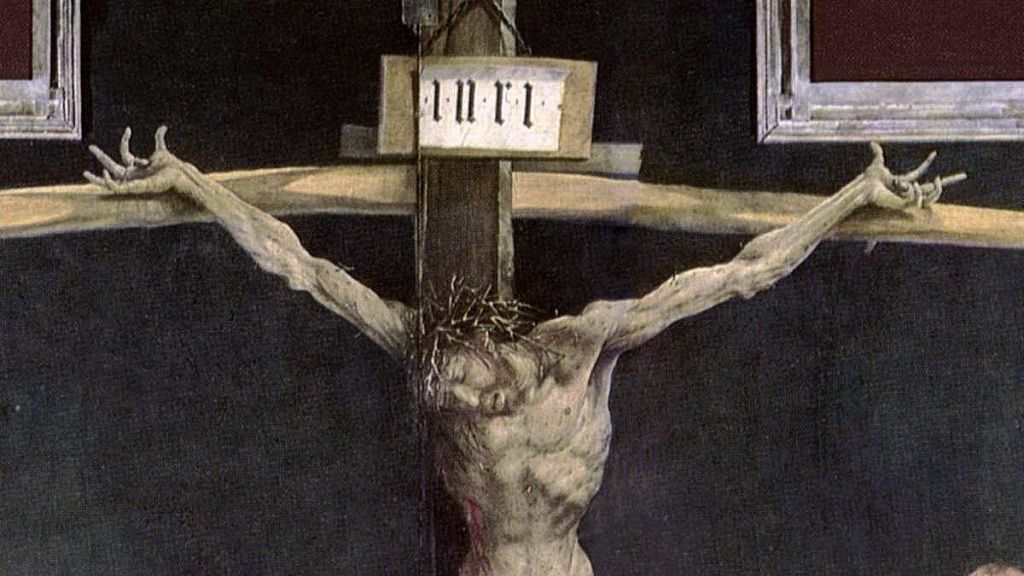
Christians will say that death by crucifixion was a horrible, humiliating way to die, and the death of Jesus was a tremendous sacrifice. We’re told that only because of this sacrifice can we get into heaven. But look a little closer. Here are seven reasons why the story doesn’t hold together.
1. Jesus’s pain was insignificant compared to an eternity of torment in hell for even a single person, and the Good Book tells us most of humanity’s billions of people are headed to hell.
2. The resurrection makes the story absurd. If Jesus died, there’s no miraculous resurrection, and if there’s a resurrection, there’s no sacrifice through death. Miracle or sacrifice—you can’t have both. The gospels don’t say he died for our sins but that he had a terrible weekend for our sins. It’s like making a grand display of generosity by writing a huge check to a charity and then stopping payment the next day.
3. This is the twenty-first century, and Bronze Age demands for human sacrifice no longer make sense. If God loves us deeply and wants to forgive us, couldn’t he just . . . forgive us? That’s how we do it, and that’s the lesson we get from the parable of the Prodigal Son where the father forgives the son even after being wronged by him. If that parable illustrates the correct approach to forgiveness, why can’t God follow it?
4. God can just forgive. In Jeremiah, he says, “I will forgive their wickedness and will remember their sins no more.” In Isaiah, God “blots out your transgressions . . . and remembers your sins no more.” There’s no need for Jesus’s perfect sacrifice.
5. Jesus’s sacrifice resolved the problem of original sin, the eating of the forbidden fruit. But since eating the fruit of the Tree of the Knowledge of Good and Evil is where moral knowledge comes from, who could blame Adam for making a moral mistake before eating it? And since Adam and Eve were first-time offenders, wouldn’t a warning be more appropriate for the crime of eating fruit?
6. If Jesus is perfect, his doing something noble is like water flowing downhill. It’s unremarkable since he’s only acting out of his nature. What else would a perfect being do? But in the right circumstance, many of us would risk our lives for a stranger, and that is a very different kind of sacrifice.
Selfish, imperfect people acting against their nature to make an unselfish sacrifice is far more remarkable than a perfect being acting in the only way he can, and yet people make sacrifices for others all the time. Why single out the actions of Jesus? Aren’t everyday noble actions by ordinary people more praiseworthy?
7. Substitutionary atonement makes no sense in Western justice. Whenever the justice system discovers that the wrong person was imprisoned for a crime, prosecutors don’t say, “Well, someone received punishment, and that’s what matters.” Instead, they search for the correct person to bring to justice. And is this the Good News? That nothing less than a human sacrifice will satisfy the rage of a Bronze Age god who created hell for those of us who pick incorrectly? God’s own book makes him look petty and cruel.
The Combat Myth is a supernatural battle between order and chaos (or good and evil). This is a common story line in the mythologies of civilizations throughout the Ancient Near East. We even find remnants of it in the Old Testament story of Yahweh.
We’ll start with an Akkadian myth that developed about a thousand years before the stories of Yahweh in the Old Testament. The Akkadian Empire followed Sumer as the primary Mesopotamian civilization.
In the Akkadian pantheon, Enlil was the king of the gods. Kingship was invested in the god who held the Tablet of Destinies, which showed all that had happened and all that would happen.
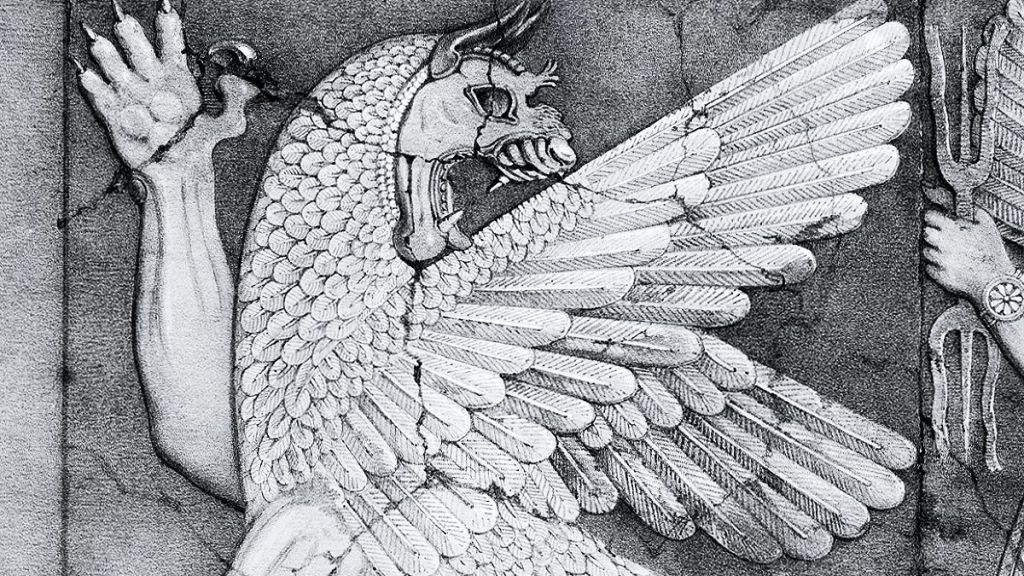
The griffin-like Anzu, assistant to Enlil, stole the Tablet and flew away, and chaos threatened order. Kingship would go to the god who restored order, but none responded to the challenge. Finally, Ninurta, an unimportant god to that point, volunteered. After defeating Anzu and restoring order, Ninurta ascended to become the king of the gods.
From examples like these in ancient Near Eastern literature, we can distil out the elements in the Combat Myth. It begins with a chaotic threat to the council of the gods. None of the gods from the older generation is willing to face the challenge, but a young god steps up. He defeats the monster and becomes the new chief god.
Another myth from this region comes from Ugarit, just north of Israel, from roughly 1300 BCE. This is the environment from which proto-Judaism emerged. In this myth, El is the chief god, and Baal (“Lord”) volunteers to fight the chaos threat. Baal uses a supernatural club to kill Yam (“Sea”), the serpent-like sea god. Next, Baal fights Mot (“Death”), another threat to order. Baal dies in this battle but is brought back to life to finally defeat Mot.
Early Judaism had the same council of gods as in earlier Ugaritic mythology. Yahweh was a son of El (also called Elyon) and just one of many in the council of the gods. Yahweh received Israel as his inheritance, and other gods in the council were given their own tribes to rule. Deuteronomy says, “When Elyon divided the nations, when he separated the sons of Adam, he established the borders of the nations according to the number of the sons of the gods. Yahweh’s portion was his people, [Israel] his allotted inheritance.”
We see the Bible’s Combat Myth in Psalms where Yahweh slays the chaos monster Rahab (another name for the sea monster) and becomes king of the council of the gods: “The heavens praise your wonders, Yahweh, your faithfulness too, in the assembly of the holy ones. For who in the skies above can compare with Yahweh? Who is like Yahweh among the heavenly beings? In the council of the holy ones God is greatly feared; he is more awesome than all who surround him.”
We find the Combat Myth first in Mesopotamian religions and then in the story of Yahweh. This shows that Yahweh developed from these earlier myths.
Myth: In common speech, “myth” means “false story,” but to scholars, the label isn’t a judgement about its truth. Rather, a myth is a sacred narrative that explains some aspect of reality. For example, Genesis has two different creation myths that explain where everything came from.
Akkadian empire: This empire began in the 2300s BCE with Sargon, its first ruler, and lasted for two centuries. It extended from Syria to the Persian Gulf. From its collapse came Assyria in the north and (a few centuries later) Babylonia in the south.
“When Elyon divided the nations”: Deuteronomy 32:8–9. This is the Dead Sea Scrolls version, and the translation is from Thom Stark, The Human Faces of God (Wipf & Stock, 2011), 71–2.
We’re told that the gospels (at least some of them) are eyewitness accounts of the life of Jesus and are therefore reliable history. Let’s explore part of that claim: How do we know Mark wrote the gospel of Mark? How do we know Mark recorded the observations of Peter, an eyewitness?
The short answer is because Papias said so. Papias was a second-century bishop who documented the oral history from the early church.
Jesus probably died in 30 CE, Mark was written around 70, and Papias documented Mark as the author in 120 (these dates are all estimates). That’s a fifty-year gap illuminated only by the unknown person(s) of unknown reliability interviewed by Papias.
But how do we know what Papias said? We don’t have the original of Papias, nor do we have a copy. Instead, we have Church History by Eusebius, which claims to quote Papias and was written in 320.
And how do we know what Eusebius said? The oldest Greek copies of his book are from the tenth century, though there is a Syriac translation from 462.
Count the successive people on whom is balanced the claim “Mark wrote the gospel of Mark, which documents an eyewitness account”: (1) Peter was an eyewitness and (2) Mark was his journalist, and (3) someone told this to (4) Papias, who wrote a book, which was preserved by (5) copyist(s), and (6) Eusebius transcribed parts of that, and (7) more copyist(s) translated Eusebius to give us our oldest manuscript copy. And the oldest piece of evidence we can put our hands on was written four centuries after Mark was written. That’s an exceedingly tenuous chain.
The sequence of people could have been longer still; we simply don’t know. The gospel of Mark is thought to have been written in Syria, and no one knows how long the chain of hearsay was from that author to Papias, who lived in western Asia Minor. No one knows how many copyists separated Papias from Eusebius or Eusebius from our oldest copies.
It gets worse. Eusebius didn’t think much of Papias as a historian and said he “seems to have been a man of very small intelligence, to judge from his books.” Evaluate the quality of Papias’s scholarship for yourself: he said Judas lived on after a failed attempt at hanging and had a head swollen so large he couldn’t pass down a street wide enough for a hay wagon. Who knows if this version of the demise of Judas is more reliable than the accounts in Matthew and Acts (which also conflict), but it’s special pleading to dismiss Papias when he’s embarrassing but hold on to his explanation of gospel authorship.
As if the tenuousness of Papias’s account wasn’t bad enough, even Eusebius is considered unreliable by modern scholars.
The problem is similar for the other gospels. We find our familiar assignment of gospel titles in Against Heresies by Irenaeus (c. 180), but our oldest copy of that book is a Latin translation from the tenth century. Tertullian also lists the four traditional authors in his Against Marcion (c. 208). Our oldest copy of that work is from the eleventh century.
If we don’t know who wrote the gospels, the claim that they were written by eyewitnesses fails, and this can no longer be an argument for New Testament reliability.








 2-Minute Christianity


